

Contents
Why aluminum “forgives no errors” in punching
Servo-driven turret head: achieving repeatability without manual adjustment
Three conditions essential to avoid defects when punching aluminum
Choosing a machine: evaluating it on the shop floor, not just on paper
The bottom line: punching is not merely an operation, but a process of control
A punching machine for aluminum profiles is not simply a press with a punch. It is a precision instrument where a micron-level error in clearance, a degree of die misalignment, or the slightest workpiece slippage immediately manifests as a dent, a burr, or an incomplete hole. We tested over 17 models at production facilities in Yekaterinburg, Kazan, and Minsk—and confirmed that punching aluminum requires control, not brute force.
Why aluminum “forgives no errors” in punching
Aluminum profiles are soft, ductile, and prone to elastic recovery. If the punching force or speed is incorrect, the material does not fracture—it deforms. We have seen instances where insufficient punch travel resulted in incomplete punching, causing internal cracks in the profile wall. Conversely, excessive pressure led to wavy edges, hole axis misalignment, and even localized material extrusion in the die zone. The key parameter is not the tonnage of the force, but positioning accuracy (within ±0.1 mm) and the stability of the clearance between the punch and die throughout the entire cycle.
Servo-driven turret head: achieving repeatability without manual adjustment
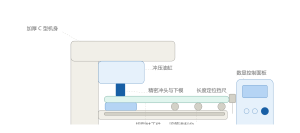
Standard mechanical punching machines are unsuitable for the serial production of window frames or facade frameworks. When a single part requires five different types of holes—ranging from 4.2 mm mounting holes to 8.5 mm process holes—manual tool changes kill productivity and introduce the risk of human error. The solution is a machine equipped with a servo-driven turret punching head. Real-world tests at a factory in Changqing (China) demonstrated that such a system achieves tool switching in 0.8 seconds and positioning accuracy within 0.05 mm. Crucially, the head must be tightly integrated with the CNC system; without this, it is impossible to compensate for thermal frame deformation during prolonged operation.
Three conditions essential to avoid defects when punching aluminum
Rigid support system: the profile must be secured not only along the axis but also across two planes; otherwise, punching generates torque that distorts the hole shape;
Tool cooling: aluminum chips quickly adhere to the cutting edge—without air or oil cooling, the punch’s service life is reduced threefold;
Material-specific calibration: punching 6063-T5 and 6061-T6 alloys requires different operating parameters, even if the thickness is identical. A smart machine must store setting profiles for each alloy grade.
We have seen customers ignore these three points and suffer defect rates of up to 12% on the first 200 parts. After adjustments, that figure dropped to less than 0.3%.
Choosing a machine: evaluate it on the shop floor, not just on paper
Focus not on the rated power, but on how force control is implemented. A high-quality aluminum profile punching machine uses a real-time load feedback system rather than relying on constant hydraulic pressure. If the sensor detects a sudden spike in resistance, the machine automatically reduces the punch feed rate. This prevents sticking, cracking, and thread stripping in the finished holes.
Another proven indicator of quality is the “soft entry” function. The punch does not slam into the metal instantly but enters with controlled acceleration. This is particularly critical for thin-walled profiles with a thickness of 1.2 mm or more.
The production facility of Jinan Kefei Machinery Equipment Co., Ltd. in the Changqing District is equipped with testing stations where every machine undergoes 72 hours of continuous testing using aluminum profiles of various grades and cross-sections. Only then does final calibration and certification (ISO 9001 and CE) take place. This is not marketing; it is a prerequisite for commissioning.
The bottom line: punching is not merely an operation—it is a process of quality control.
When choosing a punching machine for aluminum profiles, you are not just buying equipment; you are implementing a geometry control system. Even the most expensive machine is useless without precise clamping, adaptive force control, and calibration for the specific alloy. Today’s best solutions combine a rigid mechanical structure, an intelligent punching head, and a deep understanding of aluminum’s behavior—treating it as a specific material rather than just a “light metal.” It is this approach that enables the production of parts requiring no subsequent straightening, manual deburring, or rework. The next step forward is not increasing speed, but increasing confidence in the result. And that is a matter of manufacturing culture, not just technology.
Time of publication: 10-09-2026