
1.CNC System

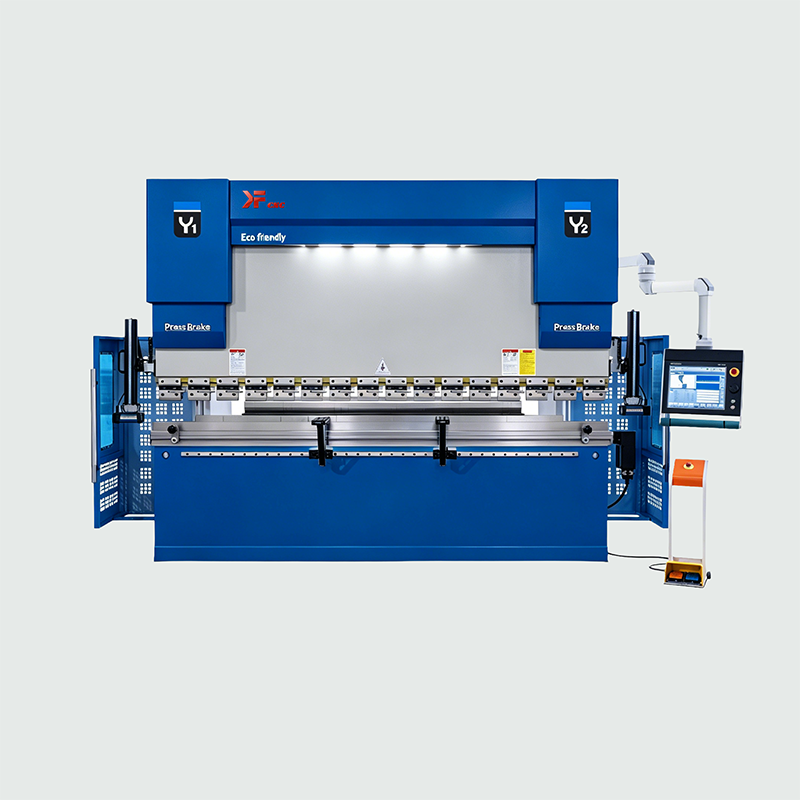
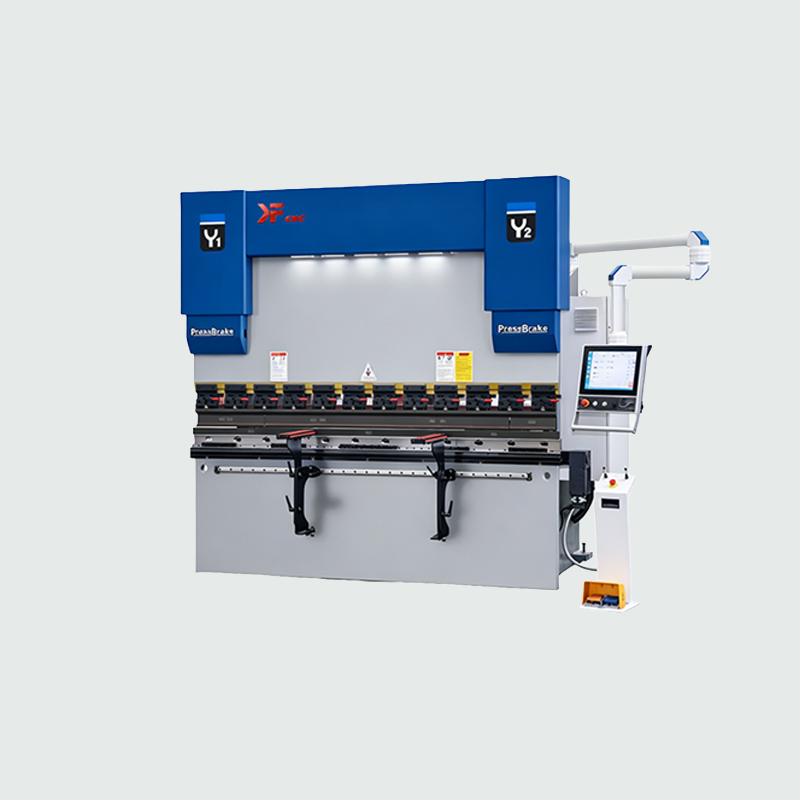
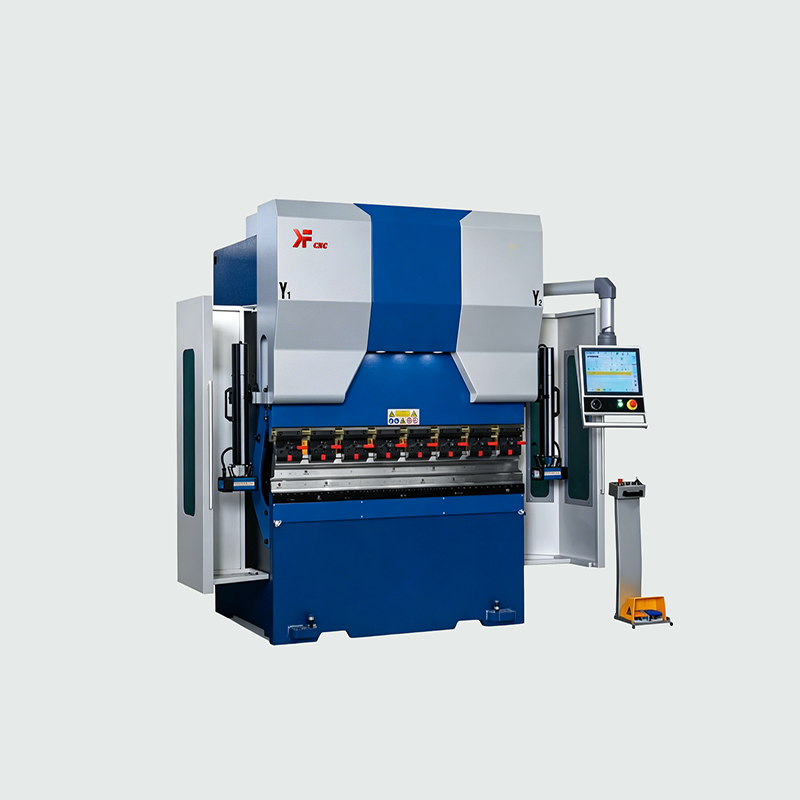
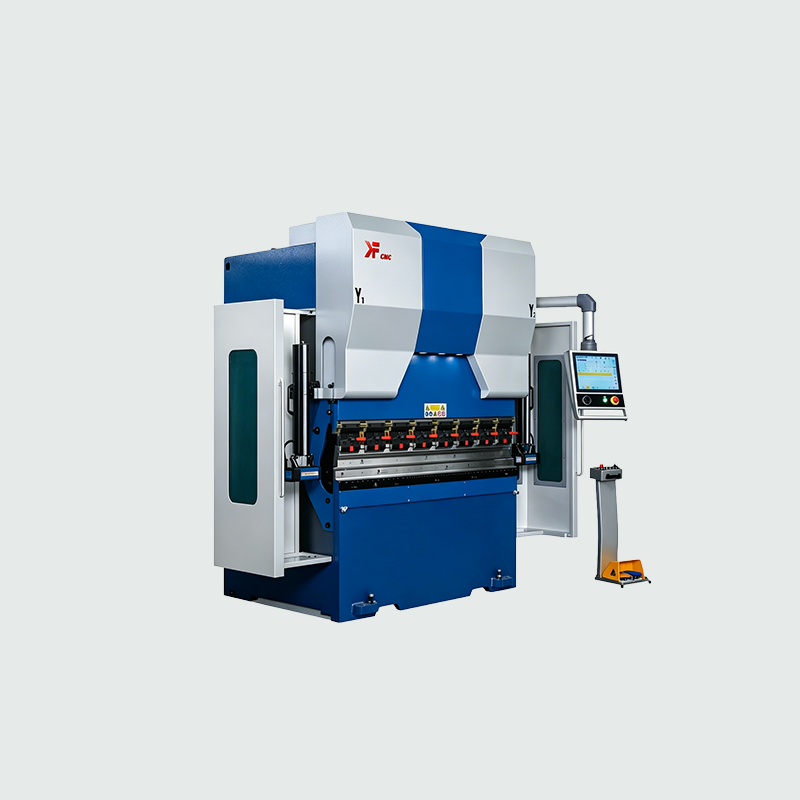
This control system features a simple and clear user interface and direct programming capabilities, which are most convenient for simple bending operations. You only need to input parameters such as the rear gear and angle for each process to complete the bending process.
2.Dual servo main motor control

The all-electric servo press brake adopts the principle of dual servos, and the Y1 and Y2 axes are controlled by powerful SYNTEC servo motors.
This design achieves the highest speed and precision and ensures extremely low operating costs.
3.Mold options to match various bending

A variety of molds can be selected to adapt to the production of various workpieces, so that the bending angle of the bending machine is more accurate and the work efficiency is higher.
4.Axis Precision Fast Backgauge

High-precision four-axis back gauge is adopted. It is driven by servo motor, ball screw and linear guide to ensure high-precision operation. Beam height is adjusted by CNC.
| CNC Press Brake Technical Parameters Table | ||
| NO. | Parameter Name | Parameter Value |
| 1 | Bending Force | 400 KN |
| 2 | Table Length | 1250 mm |
| 3 | Column Spacing | 970 mm |
| 4 | Bed Mechanism | C-type |
| 5 | Slide Stroke | 200 mm |
| 6 | Throat Depth | 330 mm |
| 7 | Maximum Slide Opening Height | 500 mm |
| 8 | Idle Speed | 200 mm/sec |
| 9 | Working Speed | 40 mm/sec |
| 10 | Return Speed | 200 mm/sec |
| 11 | Back Gauge X-axis Stroke | 400 mm |
| 12 | Number of Control Axes | Y1, Y2, X, R, Z1, Z2 |
| 13 | Y-axis Motor Power | 11KW × 2 |
| 14 | Instantaneous Power During Feed | 15 KW |
| 15 | Overall Dimensions (L×W×H) | 1340 × 1310 × 2170 mm |
| 16 | Machine Weight | 2.8 T |
Which Press Brake Fits Your Work?
| Model | Drive | Tonnage | Table length | CNC system | Best for |
|---|---|---|---|---|---|
| KEP | All-electric servo, dual SYNTEC | 400 kN (40 t) | 1250 mm | SYNTEC touchscreen | Thin sheet, small parts, high-mix runs |
| KPH | Electro-hydraulic, Bosch Rexroth | 800-3200 kN (80-320 t) | 2500-6000 mm | Delem DA-53T | Thicker plate, long workpieces |
| KTP | Torsion bar sync, hydraulic | 400-6000 kN (40-600 t) | 1600-6000 mm | TP10S 10-inch touchscreen | Budget entry, standard bending |
* Tonnage in kN; 400 kN is about 40 t. Table lengths are the standard sizes listed on each model page.
FAQ
Q: What is an all-electric servo press brake?
A: It is a press brake whose ram is driven directly by servo motors instead of a hydraulic pump and cylinders. The KEP uses two 11 kW SYNTEC servos on the Y1 and Y2 axes, so there is no hydraulic oil to change, no valve drift and no oil warm-up before the first bend.
Q: What tonnage and table length does the KEP offer?
A: One configuration: 400 kN (about 40 t) of bending force over a 1250 mm table, 970 mm between the columns and a C-type frame. Slide stroke is 200 mm, throat depth 330 mm and maximum open height 500 mm.
Q: How much energy does it save compared with a hydraulic press brake?
A: KAFE rates the KEP at roughly 80% less energy than a comparable hydraulic machine, because the servos draw power only while the ram is moving. Instantaneous draw during feed is 15 kW, and there is no hydraulic oil, no pump and no oil cooling to run.
Q: What do the six CNC axes control?
A: Y1 and Y2 position the left and right sides of the ram, X sets the back-gauge depth with a 400 mm stroke, R sets the back-gauge height and Z1/Z2 move the back gauge sideways.
Q: How thick a sheet can it bend?
A: Capacity depends on the die opening. With a standard 8xV die, 400 kN is enough for roughly 4 mm mild steel across the full 1250 mm table, and thicker sheet on shorter lengths. Stainless steel needs more force at the same thickness, aluminium less. Send us material, thickness and bend length and we will confirm the tooling.
Q: How fast is the machine?
A: Idle speed is 200 mm/sec, working speed 40 mm/sec and return speed 200 mm/sec, with the two Y axes held in sync by the servo pair rather than by a torsion bar.
Q: What control system and back gauge does it use?
A: A SYNTEC touchscreen CNC with direct programming: enter the back-gauge position and the angle for each step. The four-axis back gauge runs on a servo motor, ball screw and linear guide, and its beam height is set from the CNC.
Q: What are the dimensions, weight and power draw?
A: Overall dimensions are 1340 x 1310 x 2170 mm and the machine weighs 2.8 t. Instantaneous power during feed is 15 kW, from two 11 kW Y-axis servos.
Q: What is the price and delivery time, and can I test my part?
A: Price depends on configuration, tooling and options. Delivery is normally 30-40 days after deposit. Send us your material, thickness, bend length and a drawing, and we will quote and arrange a bending test.
Related Press Brake Machines
- Electro-hydraulic CNC press brake (KPH) — 80-320 ton and tables up to 6000 mm, with Delem DA-53T control, for thicker plate and long workpieces.
- Torsion bar CNC press brake (KTP) — 40-600 ton, the economical way into CNC bending, with a TP10S 10-inch touchscreen.
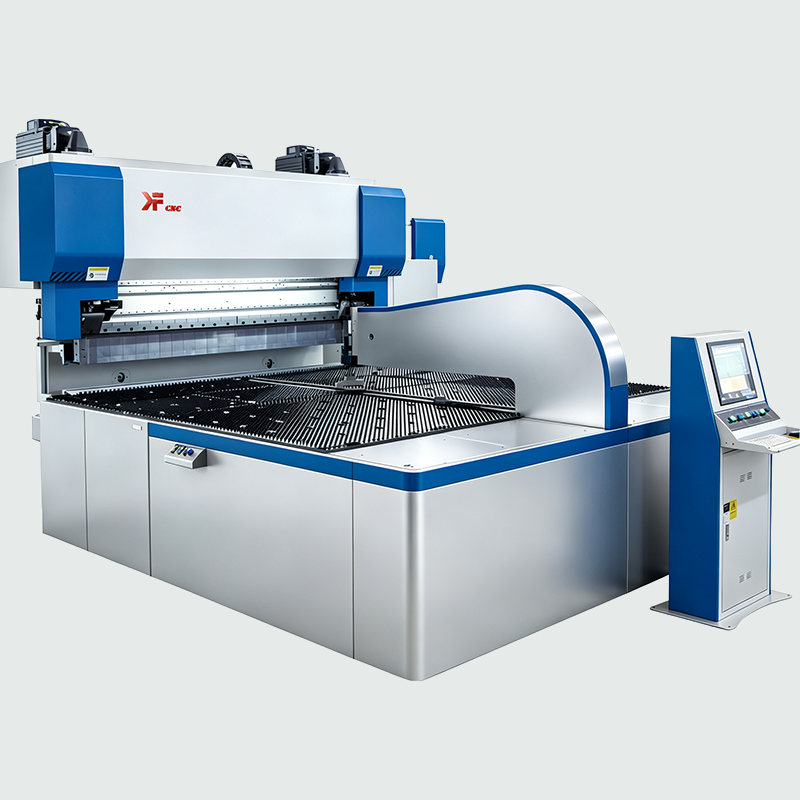
- Manual tool-changing panel bending center (KMB-2200) — 2250 mm bending length, 0.5 s per bend, and no dies to change for each part.
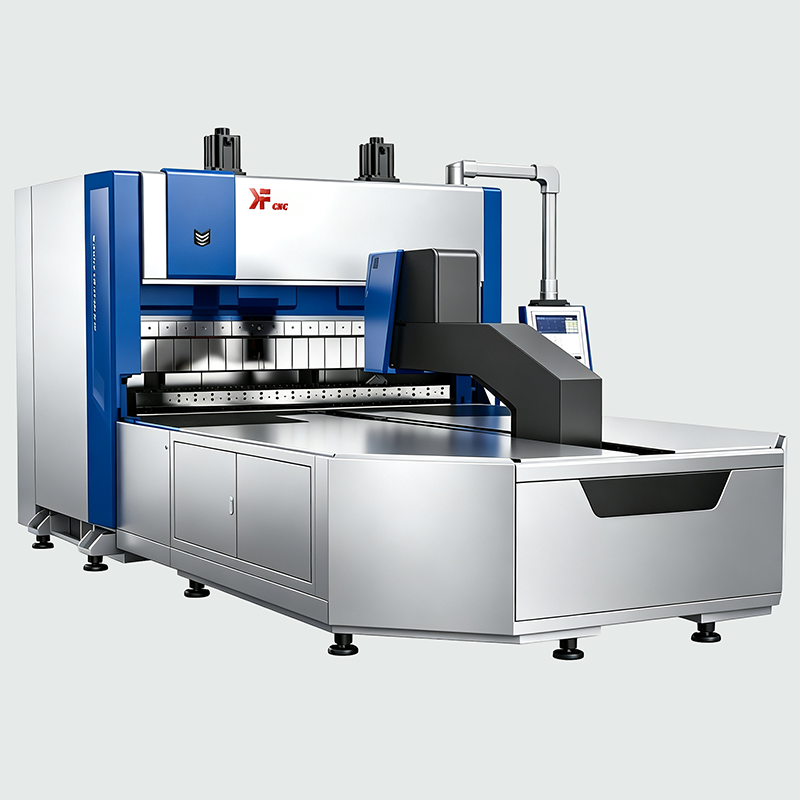
- Automatic tool-changing panel bending center (B2530) — 2500 mm, 18 axes and automatic tool change, for box and enclosure work.