
Scope of Application
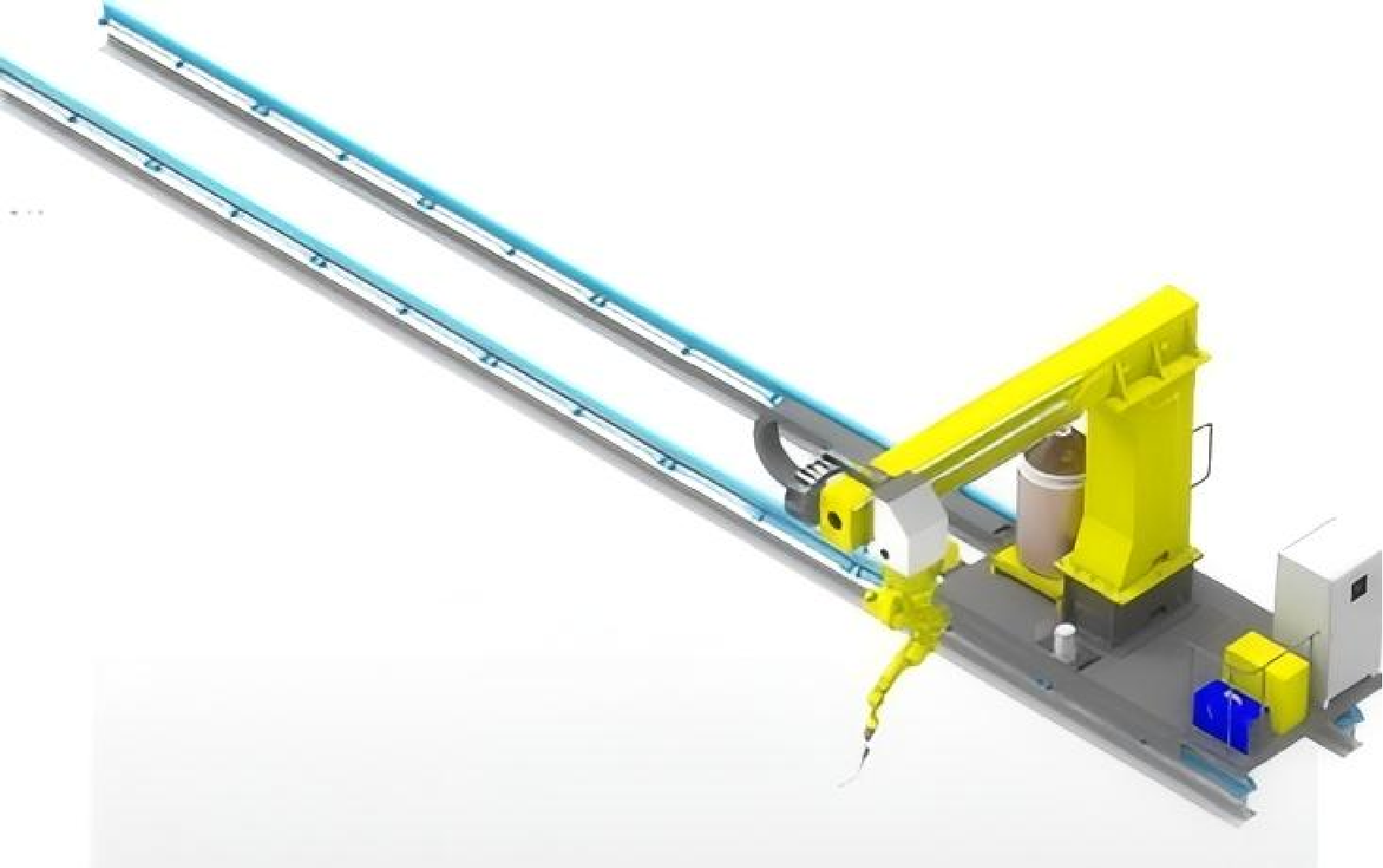
Suitable for long workpieces—such as stiffening plates for H-beams, steel box girders, bridge ribs, bridge diaphragms, vehicle body panels, and transformer tanks—this system enables welding operations to be performed anywhere within the reach of the robotic carriage's travel axis and the cross-beam's movement axis.
It supports a wide range of automated welding processes, including MAG, MIG, TIG, plasma arc welding, and laser welding.
Features
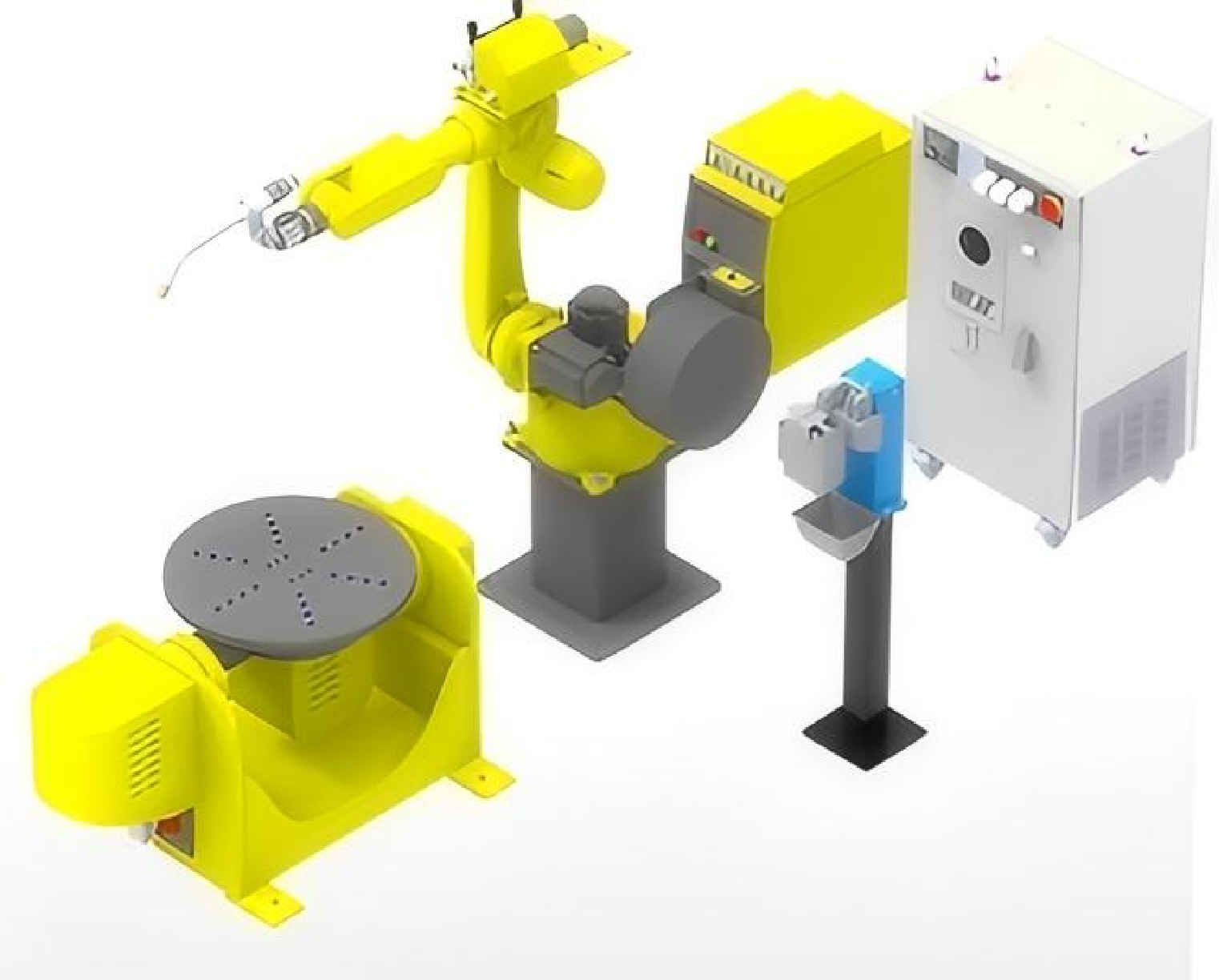
· The robot is mounted in an inverted position on a horizontal arm. The travel axis, the horizontal arm axis, and the robot unit itself operate in coordination, significantly expanding the robot's reach.
· The carriage features a high level of component integration and a flexible layout. It is driven by high-precision servo motors and gear reducers, with an optimized center-of-gravity design and an integrated anti-tipping mechanism, ensuring safe, stable, and reliable operation.
Dual-machine configuration
The horizontal arm can be configured with either a single or dual-unit setup; both can function as an extended robotic axis for motion, while the single-unit configuration allows for the addition of a vertical lifting axis.
Master-Slave Coordination/Switchover
Interconnection and communication between the two units are managed centrally by the master unit. Synchronization can be initiated with a single click, or the units can be operated independently.
Location-awareness capability
A robust weld-seam sensing system automatically identifies the start and end points of the workpiece and performs real-time positional correction during the welding process.
Programming Methods
Utilizing a unique parametric programming technique, it eliminates the need for complex manual teaching or 3D modeling, and remains unaffected by variations in workpiece dimensions.
Intelligent Expansion
It can be equipped with a weld pool monitoring system, a data acquisition and storage system, and an edge-cloud collaborative operating system.
Technical Specifications
| Robot payload and reach range | ARC12-1400 / ARC10-1600 / ARC12-2000 |
| Repeatable positioning accuracy of a robot | +/-0.03 mm |
| Protection rating | Robot unit: IP54 / IP67 (wrist); control cabinet: IP54 |
| Track length | Custom made |
| Column height | Custom made |
| Crossbeam length | Custom made |
Suitable Industries
Steel structure fabrication, bridge manufacturing, heavy machinery, vehicle body production, and transformer tank manufacturing.
Application Scenarios
Welding anywhere within the reach of the carriage travel axis and cross-beam movement axis on long workpieces such as H-beam stiffening plates, steel box girders, bridge ribs, bridge diaphragms, vehicle body panels and transformer tanks; single or dual cantilever units with master-slave coordination; and MAG, MIG, TIG, plasma arc and laser welding.
ARC Series Robot Welding System with Cantilever and Ground Rail at a Glance
| Specification | Value | Specification | Value |
|---|---|---|---|
| Robot model | ARC12-1400 / ARC10-1600 / ARC12-2000 | Repeat positioning accuracy | +/-0.03 mm |
| Protection rating | Robot IP54 (wrist IP67); cabinet IP54 | Robot mounting | Inverted on horizontal arm |
| Track length | Custom made | Column height | Custom made |
| Crossbeam length | Custom made | Reach | Travel axis + arm axis + robot |
| Configuration | Single or dual cantilever unit | Dual-unit control | Master-slave, one-click sync |
| Seam sensing | Robust weld-seam sensing, real-time correction | Welding processes | MAG / MIG / TIG / plasma / laser |
* Values shown are the representative configurations; final robot model and dimensions depend on the workpiece and weld requirements.
FAQ
Q: What is the ARC series cantilever and ground rail welding system used for? A: It is a robotic welding system with the robot inverted on a horizontal cantilever and a ground rail travel axis, for long workpieces such as H-beam stiffening plates, steel box girders, bridge ribs, bridge diaphragms, vehicle body panels and transformer tanks. Welding can be done anywhere within the reach of the carriage travel axis and cross-beam movement axis.
Q: How does the cantilever design extend the robot's reach? A: The robot is mounted in an inverted position on a horizontal arm. The travel axis, the horizontal arm axis and the robot unit operate in coordination, significantly expanding the robot's reach compared with a floor-mounted setup.
Q: Can two robots work on one system? A: Yes. The horizontal arm can be configured as a single or dual unit; both act as an extended robotic axis. In dual-unit setup, interconnection and communication are managed centrally by the master unit, so synchronization can be started with one click or the units can run independently.
Q: What robot models and accuracy does it offer? A: Three ARC series configurations are available: ARC12-1400, ARC10-1600 and ARC12-2000. Repeat positioning accuracy of the robot is +/-0.03 mm.
Q: Can the track, column and crossbeam be customized? A: Yes. Track length, column height and crossbeam length are all custom made to suit your workpiece and the required working envelope. Tell us your workpiece size and we will propose the right dimensions.
Q: Which welding processes does it support? A: It supports MAG, MIG, TIG, plasma arc and laser welding, making it suitable for a wide range of automated welding tasks on long structural workpieces.
Q: What protection rating does the system have? A: The robot is rated IP54, with IP67 protection on the wrist; the control cabinet is rated IP54, suitable for demanding workshop environments.
Q: Does it support weld-seam sensing and simple programming? A: Yes. A robust weld-seam sensing system automatically finds the start and end points of the workpiece and corrects position in real time during welding. A unique parametric programming technique removes the need for complex manual teaching or 3D modeling and is unaffected by workpiece size variations. Optional weld-pool monitoring, data storage and edge-cloud software are also available.
Q: What is the price, delivery time, and can I test my workpiece? A: Price depends on the robot model, track length, column height, crossbeam length and whether one or two units are required. Send us your workpiece details and weld requirements and we will confirm the configuration, provide a quote and arrange a sample welding test. Delivery time is confirmed with the order.