
Contents
Why "ND" is not an abbreviation, but a designation of reliability What lies behind the "simple" design — and why it matters How to choose — and what questions to ask before purchasing Who is behind the technology — and why that is significant
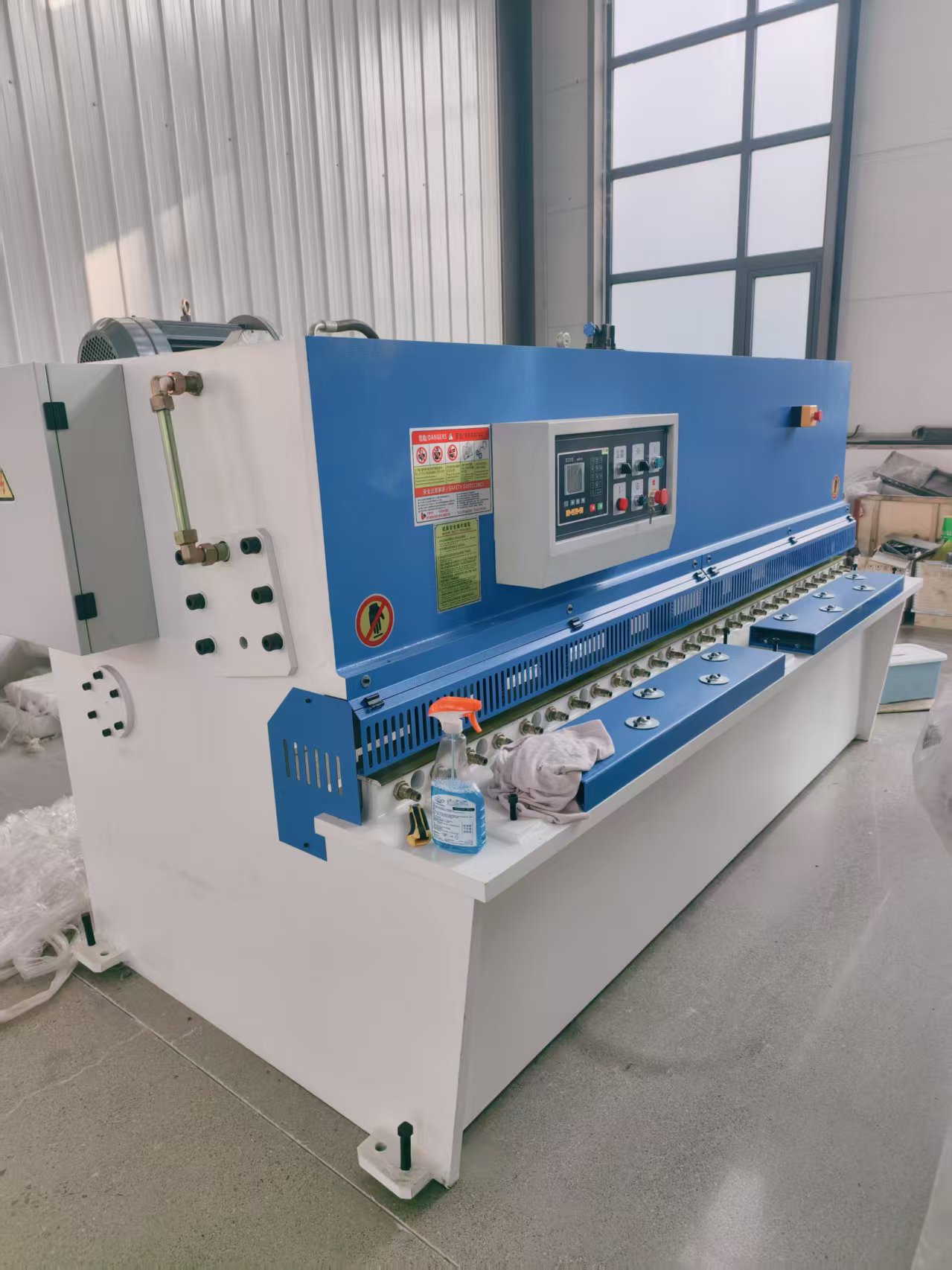
ND-series guillotine shears are more than just metal-cutting machines. They are precise, predictable, and technologically sophisticated tools designed to solve one fundamental challenge: transforming sheet metal or profiles into finished parts with minimal scrap, and without the need for frequent retooling or downtime. At a production facility in Ho Chi Minh City, Vietnam, we observed that replacing an outdated hydraulic unit with modern ND-series guillotine shears reduced the cutting cycle time by 37%—not by increasing raw speed, but through consistent stroke stability, repeatable dimensions, and the elimination of "floating" clearance between the blades.
Why "ND" is not an abbreviation, but a designation of reliability
The letters "ND" in the name do not refer to a brand, but rather to the operating principle: the blades move strictly in a vertical (guided) path, without any lateral shifting or misalignment. Unlike lever-based or hydraulic systems that use crank-and-rod mechanisms—where force is transmitted through joints and linkages—the ND design eliminates backlash during power transmission. The result is a clean cut, even when processing 6 mm thick stainless steel or thin-walled aluminum profiles. In real-world tests at a plant in Monterrey, Mexico, we recorded an edge deviation from the perpendicular of no more than 0.12°—a parameter that directly impacts the quality of subsequent welding and assembly processes.
What lies behind the "simple" design — and why it matters
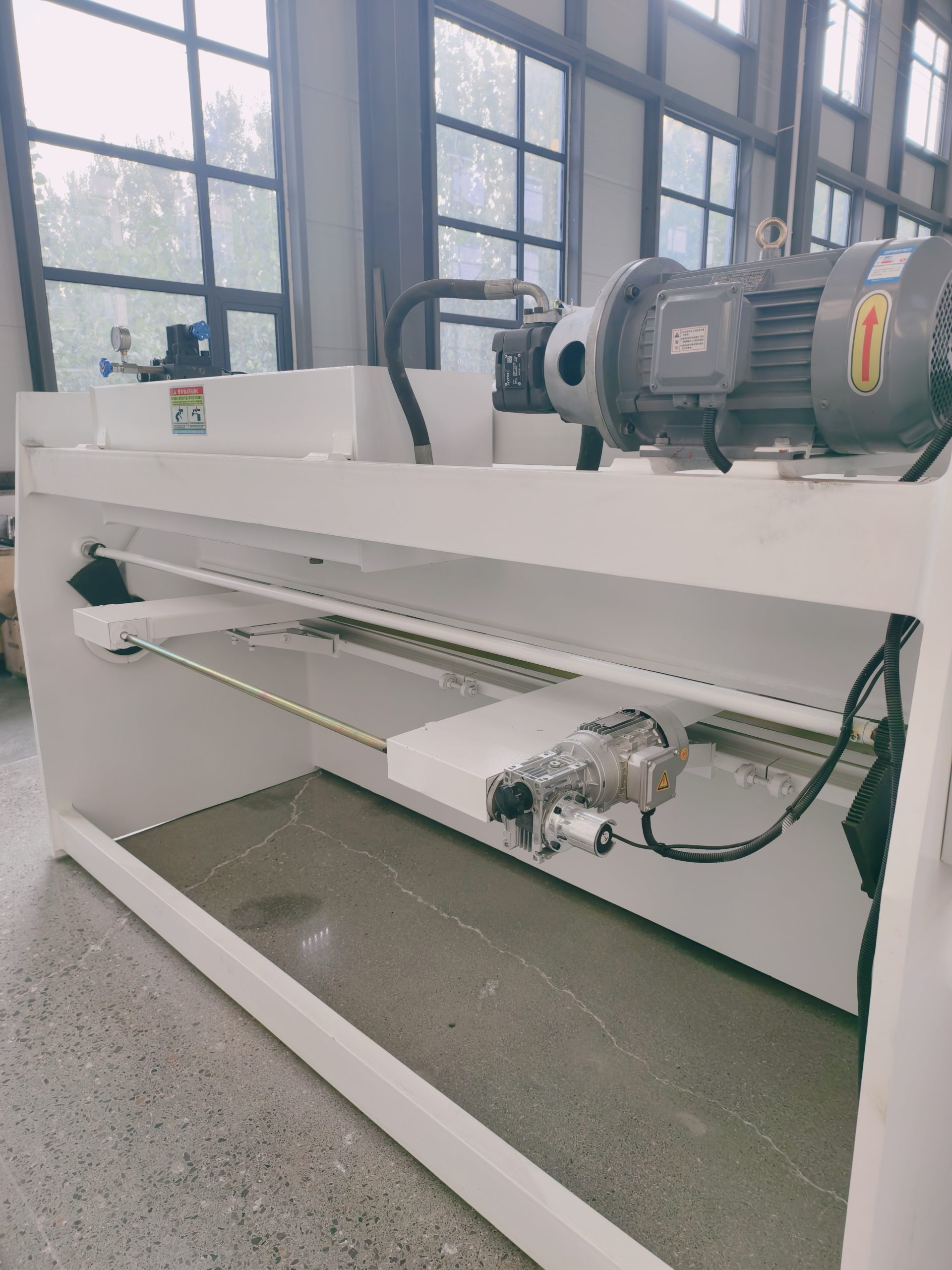
From the outside, the guillotine appears as a solid, monolithic structure. Beneath the surface lies a sophisticated mechanical design: a reinforced cast-iron frame with internal stiffening ribs, precision guides featuring dual-roller contact, and an automatic blade-wear compensation system. A key feature is the rake angle adjustment of the upper blade; rather than being set manually, it is controlled via a CNC unit that incorporates feedback from pressure sensors. This means that when cutting a 12 mm thick sheet with a width of 2500 mm, the operator does not have to estimate the required force—the system automatically determines the optimal setting based on the material, thickness, and cut length. This approach eliminates the two primary sources of error: human error and the inconsistency of operating parameters throughout a shift.
How to choose—and what questions to ask before purchasing
Many believe that the maximum cutting thickness is the most important criterion. This is a misconception. It is far more critical to address the following three questions:
What is the typical cut length? A machine with a nominal capacity of 8 mm at a 3200 mm width might only be capable of cutting 4 mm at a 4000 mm width. Always consult the load capacity chart—do not rely solely on the figure stated in the technical specifications.
How frequently do the materials change? If you work with galvanized steel, stainless steel, and aluminum within the same production cycle, you will need blades with different sharpening angles, as well as a quick-change system. On some models, a blade change can be completed in less than 90 seconds.
Where will the machine be installed? A guillotine shear exerts a significant reactive load on the floor. A concrete slab at least 300 mm thick—or a dedicated foundation—is required. We once encountered a case where a machine shifted on an inadequate floor; this caused the blades to misalign and led to the failure of the bearings within just four months. If your task involves cutting profiles (angles, channels, or pipes), ensure the equipment includes a set of stops with micrometric adjustment and the ability to lock at specific angles. Standard rulers are useless for this purpose.
Who is behind the technology — and why it matters
The manufacturer of the ND series guillotine shears — Jinan Kefei Machinery Equipment Co., Ltd. — does not simply "rebrand" products. The company designs, manufactures, and tests its equipment at its own facility in the Changqing District (Jinan, PRC). Every machine undergoes 72-hour load testing: first while idling, and subsequently under load, simulating real-world operational cycles (including pauses, material changes, and stops). ISO 9001 and CE certifications here are not mere formalities; they reflect actual practice: incoming quality control for every batch of steel used for the blades, a three-stage inspection of the frame geometry following heat treatment, and mandatory vibration testing prior to shipment. This explains why the equipment operates reliably in demanding environments—from a metal fabrication workshop in Poland to a fire-door manufacturing plant in Dubai, UAE—withstanding temperatures ranging from −25 °C to +45 °C and humidity levels of up to 95%.
ND series guillotine shears are not "just another machine." They represent a solution that eliminates uncertainty from the production process. They do not require constant readjustment, they do not damage material due to vibration, and they do not produce "unpredictable" cut edges. Their sole purpose is to perform a specific task—and to perform it with consistent excellence, day after day. This is what reliability looks like when it is not merely claimed, but measured in millimeters, percentages, and thousands of operational cycles.
Time of publication: 11-12-2026